


Can More Heat Reduce Purification Efficiency?
.png)

%201.svg)

Does Fuel Preheating Always Improve Separator Performance?
Efficient fuel treatment is one of the most important factors affecting the reliability and longevity of a marine diesel engine. Among marine engineers, it is widely known that fuel should be heated before entering the separator. But does that mean the higher the fuel temperature, the better the separator will perform?
Why Is Fuel Preheated?
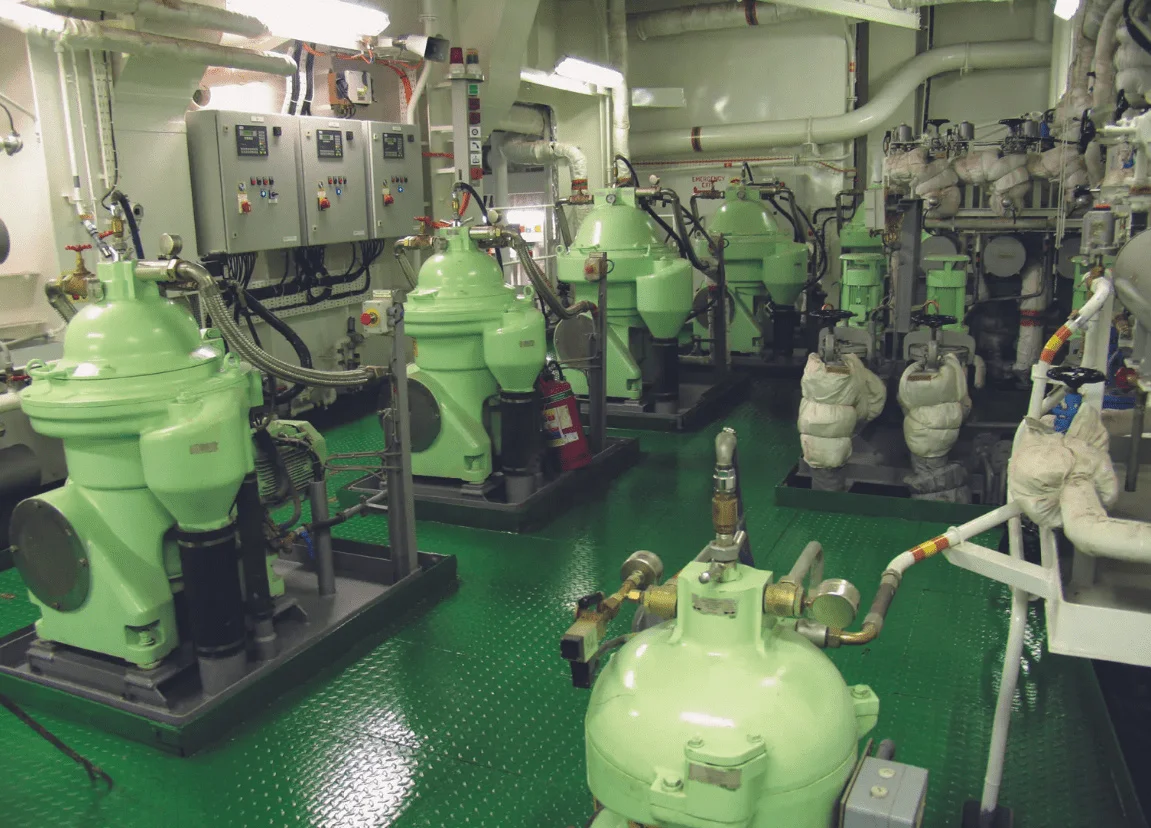
Fuel preheating is an essential part of the fuel treatment process. As fuel temperature increases, its viscosity decreases, allowing water and solid contaminants to separate more efficiently inside the centrifugal separator. This is especially important when treating Heavy Fuel Oil (HFO), which has a much higher viscosity than distillate fuels. However, fuel temperature alone does not determine separator performance.
More Heat Does Not Always Mean Better Separation
One of the most common misconceptions is that increasing the fuel temperature will always improve purification efficiency. In reality, every fuel type has its own optimum purification temperature, specified by engine manufacturers and separator manufacturers.
Operating above the recommended temperature may lead to several undesirable effects, including:
- Reduced fuel stability;
- Increased sludge formation;
- Deterioration of the properties of certain hybrid fuels;
- Reduced separation efficiency.
For example:
- Heavy Fuel Oil (HFO) is typically purified at approximately 98°C.
- Hybrid fuels are generally recommended to be purified at 80 - 85°C.
Using temperatures outside the recommended operating range may reduce the effectiveness of the fuel treatment process rather than improve it.
Separator Performance Depends on More Than Temperature
Although fuel temperature is important, it is only one of several factors influencing separator performance.
Efficient purification also depends on:
- Correct fuel viscosity;
- Separator throughput (flow rate);
- Retention time inside the separator bowl;
- Proper separator settings;
- Compliance with the equipment manufacturer's recommendations.
Even perfectly heated fuel cannot compensate for incorrect separator operation or poor maintenance.
Practical Considerations Onboard
Modern ships often operate with different fuel grades, including HFO, VLSFO and hybrid fuels. Each of these fuels behaves differently during purification. Marine engineers should therefore avoid using a single temperature setting for every fuel type. Instead, they should always follow the recommendations provided by the engine and separator manufacturers and monitor separator performance during operation. A properly adjusted separator operating within its recommended temperature range will generally provide better purification than one operating at unnecessarily high temperatures.
Conclusion
Fuel preheating improves separator performance only up to the optimum operating temperature.
Beyond that point, additional heating does not improve fuel purification and, depending on the fuel type, may even reduce fuel stability and increase sludge formation. Effective fuel treatment is achieved through the correct combination of temperature, viscosity, separator settings, retention time and proper operating procedures - not by increasing temperature alone.
Test Your Knowledge
Think you know modern fuel treatment systems?
Take our Fuel Oil Treatment & Management Quiz and test your knowledge of:
Train • Sail • Grow


%201.svg)
Read Similar Articles