


.png)

%201.svg)

What Happened in Devonport
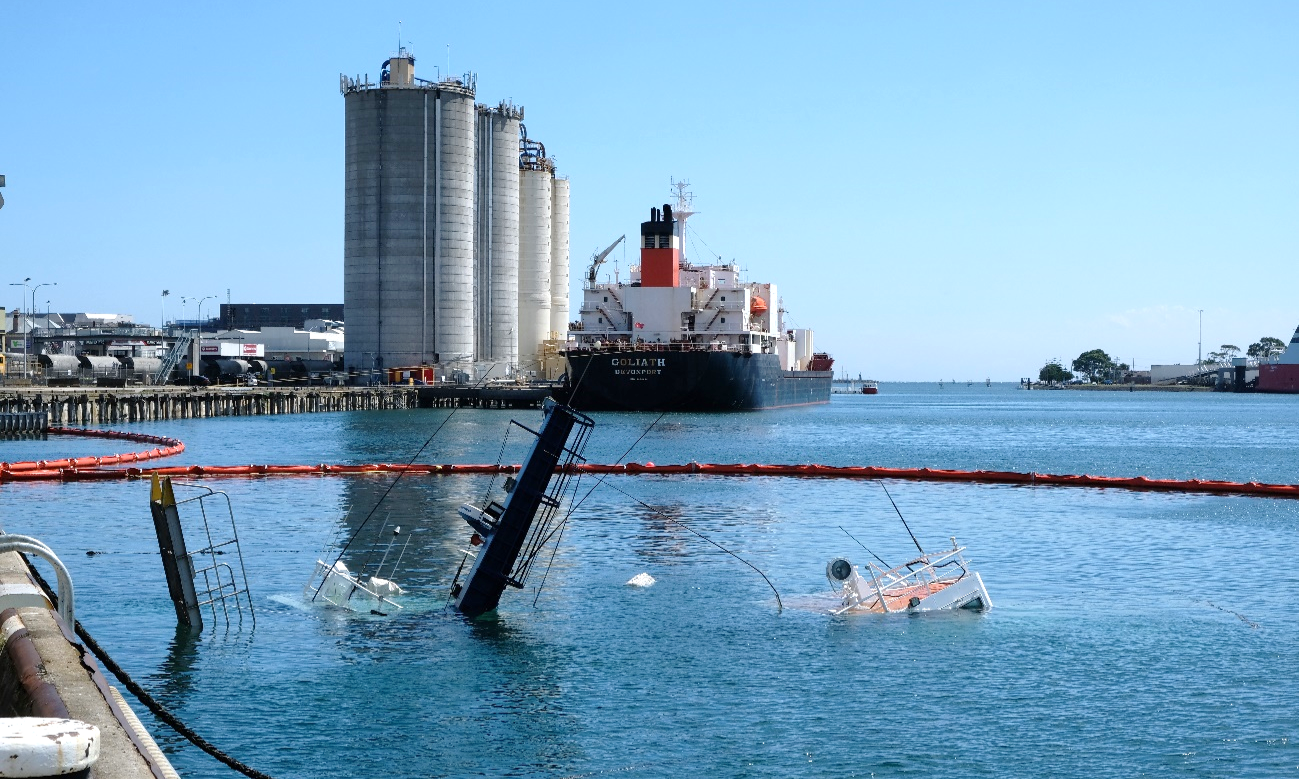
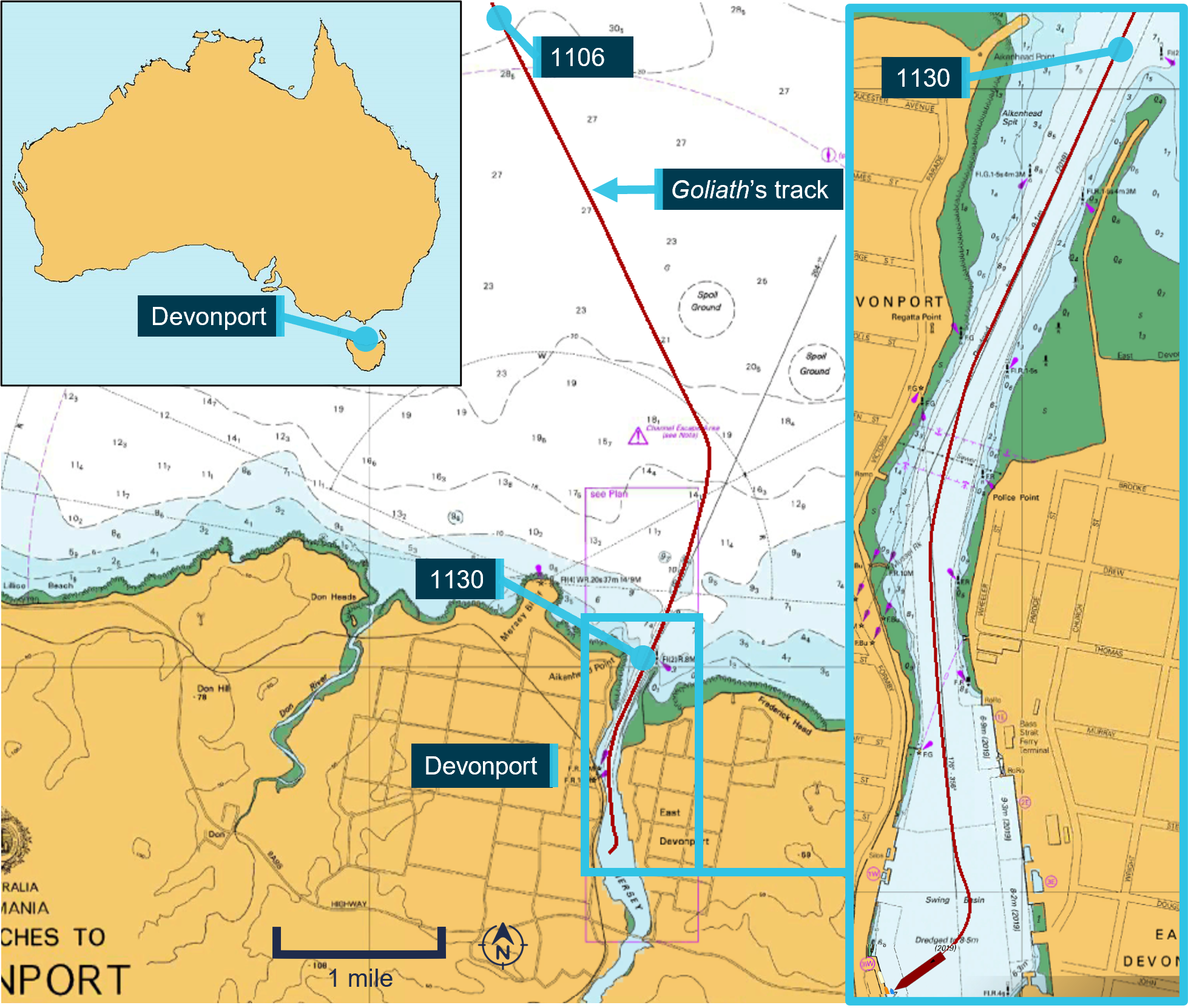
The 143-metre bulk cement carrier Goliath arrived from Melbourne and prepared to berth at the bulk cement berth One West in Devonport, Tasmania.
According to the ATSB report, weather and traffic conditions were considered manageable:
- overcast skies
- slight seas
- light north-easterly breeze
- ebb tide
- no expected vessel traffic conflicts
During manoeuvring inside the swing basin, the vessel was required to turn before approaching the berth.
The master moved to the port bridge wing and operated the VecTwin joystick steering system. However, the vessel’s steering mode remained in manual steering, meaning the rudders were still controlled by the wheel inside the wheelhouse.
The master believed the vessel was operating in joystick mode, where ahead engine input could generate astern thrust effects. As the vessel started moving toward the moored tugs, additional ahead engine orders were applied under the assumption the vessel would slow down.
Instead, the vessel accelerated.
At approximately 11:48:22, Goliath collided with tug York Cove, which was moored alongside Campbell Cove.
Both tugs were unmanned at the time of the accident, sustained severe structural damage, flooded rapidly, and eventually sank.
The Australian Transport Safety Bureau (ATSB) identified multiple critical safety failures contributing to the accident.
Key findings included:
- Incorrect steering mode selection
- Incomplete transfer of bridge controls checklist
- Ineffective Bridge Resource Management (BRM)
- Lack of required BRM training
- Misleading joystick indication system
The ATSB concluded that during the transfer of controls from the wheelhouse to the bridge wing, the correct steering mode was never selected.
As a result, the master believed joystick steering control was active while actual rudder control remained connected to the wheel inside the wheelhouse.
The investigation also highlighted operational distractions during a critical phase of manoeuvring, including:
- VHF communications
- bridge team handover
- unclear allocation of support roles on the bridge
Additionally, neither the master nor the second mate had completed required BRM training.
The ATSB further noted that the absence of casualties was largely due to the fact that the tugs were unmanned during the collision.
Environmental Damage and Financial Losses
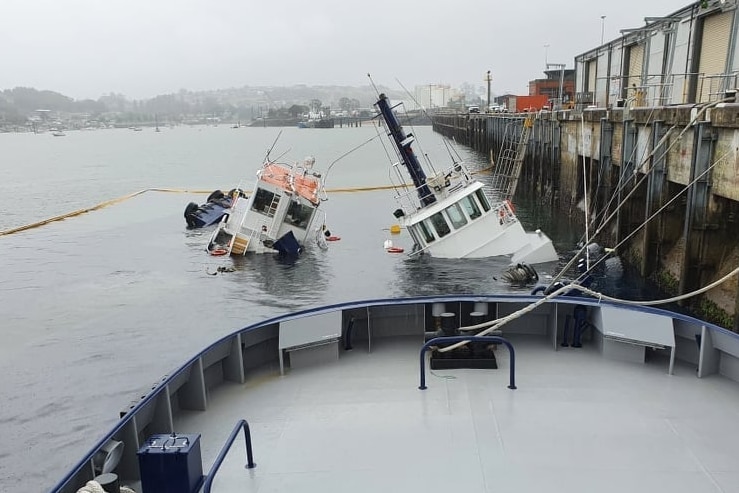
Although Goliath sustained only minor bow damage, both tugs were declared a constructive total loss.
Following the sinking, diesel fuel and hydrocarbons leaked into the Mersey River, triggering a large pollution response operation.
According to Australian media reports:
- approximately 69,000 litres of diesel and oil products were onboard the tugs
- salvage and clean-up operations lasted more than six months
TasPorts later filed legal claims against CSL Australia totaling approximately A$22 million.
The claims included:
- wreck removal
- salvage operations
- hydrocarbon containment
- pollution clean-up
- disposal of the wrecks
The High Court Australia Decision
CSL Australia attempted to limit its financial liability under the Convention on Limitation of Liability for Maritime Claims.
The company argued liability should be capped at approximately A$15 million.
However, Australian law excludes certain claims related to:
- wreck removal
- destruction of wrecks
- pollution containment
- hydrocarbon removal
from standard maritime liability limitation protections.
On 13 May 2026, the High Court of Australia unanimously dismissed CSL Australia’s appeal.
The Court confirmed that claims related to hydrocarbon containment, removal, disposal, and wreck removal were not subject to the normal liability cap.
The case will now continue in the Federal Court, where the final compensation amount is expected to be determined.
Why This Case Matters for the Maritime Industry
The Goliath collision demonstrates how a single steering configuration error, combined with ineffective BRM and incomplete operational checks, can escalate into:
- vessel loss
- environmental damage
- multi-million-dollar claims
- long-term legal consequences
The case has become an important example for:
- Bridge Resource Management training
- steering control transfer procedures
- tug operation safety
- maritime liability discussions
- pollution response planning
It also highlights the increasing legal exposure shipowners may face in Australia regarding wreck removal and environmental claims.
3D Video Analysis
3D Video Analysis of the Goliath Accident
Investigation Source
Official ATSB investigation report:
Australian Transport Safety Bureau (ATSB)


%201.svg)
Read Similar Articles